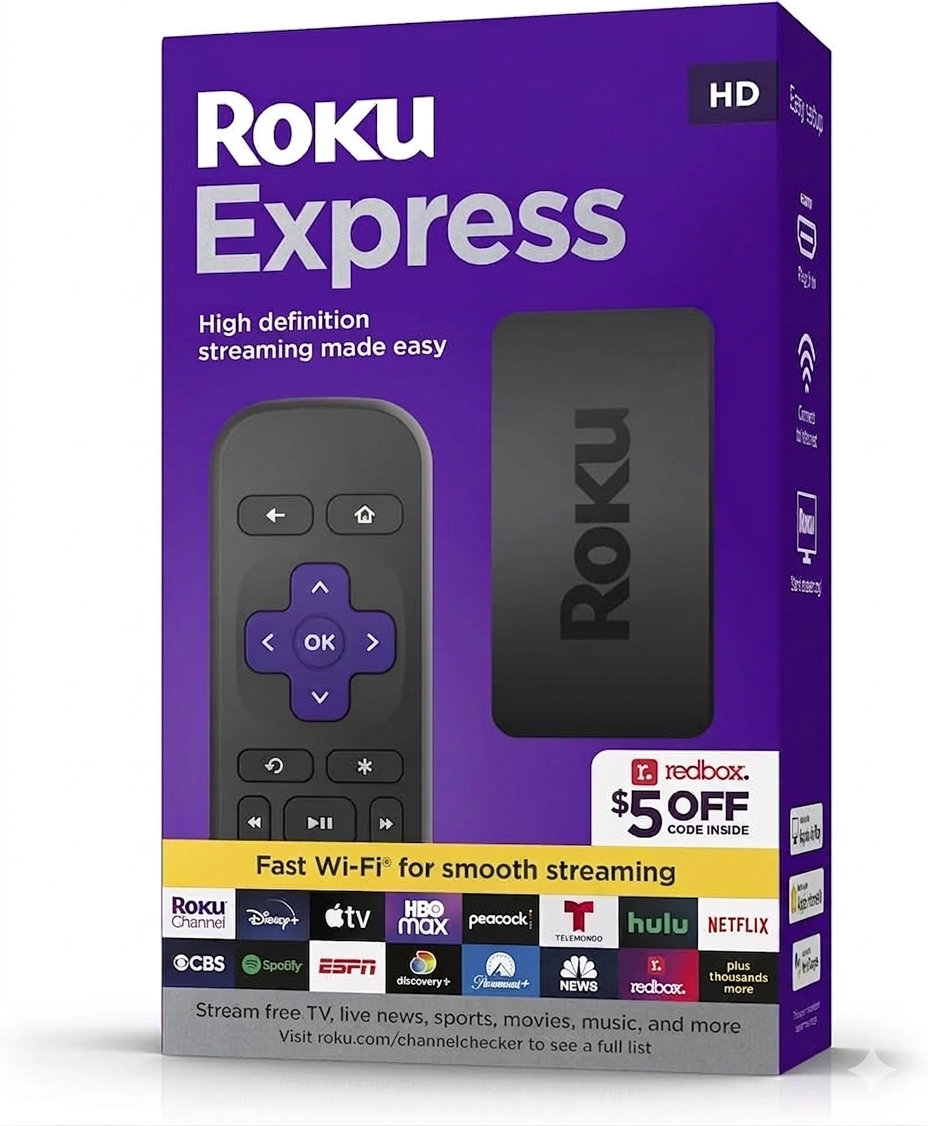
In the rapidly evolving landscape of digital entertainment, the allure of a “budget-friendly” price tag can often lead consumers down a path of technical frustration. As we navigate the current shopping season, major retailers are aggressively pushing entry-level hardware. At the forefront of these promotions is the Roku Express HD. While the initial cost seen in “image.png” suggests a massive bargain, a closer look at the specifications reveals a device that is struggling to keep pace with the demands of modern streaming standards in 2026.
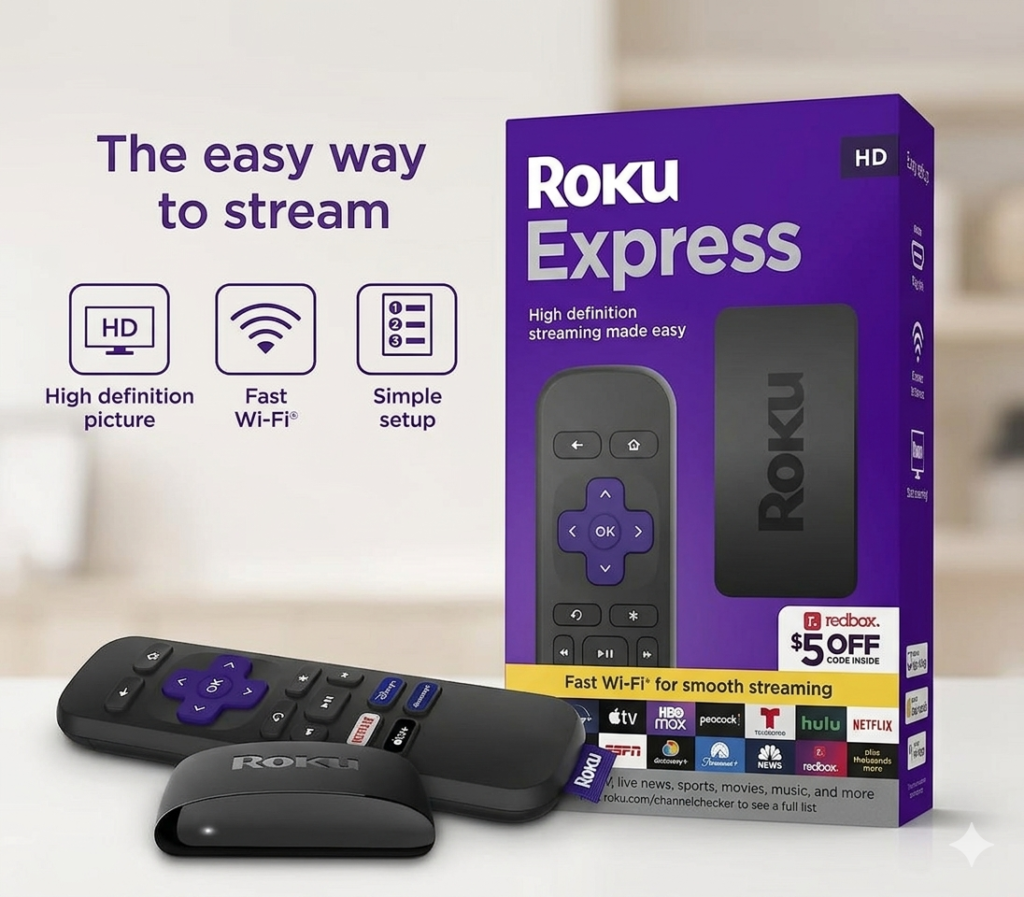
1. The 1080p Bottleneck: A Relic in a 4K World
The primary technical limitation of the Roku Express HD is its resolution ceiling. In an era where 4K Ultra HD has become the standard for almost all new television sets, investing in a 1080p-only device is a strategic error for any forward-thinking consumer.
The Bitrate Reality
Modern streaming platforms like Netflix, Disney+, and Amazon Prime Video are increasingly optimizing their content delivery for high-bitrate 4K streams. When you utilize a device like the Roku Express HD, you aren’t just losing out on pixels; you are often receiving a lower-quality audio-visual feed overall. This is because many services bundle higher-quality audio formats (like Dolby Atmos) and better color grading (HDR) exclusively with their 4K tiers and hardware.
Long-Term Value vs. Immediate Savings
The price difference between an HD-only unit and a 4K-capable stick is often less than $15 during holiday sales. By choosing the Roku Express HD, you are essentially buying hardware that is already outdated. Within a year or two, as more platforms phase out legacy support for 1080p optimization, the performance gap will only widen, likely forcing you to upgrade sooner than you anticipated.
2. Hardware Limitations: Under the Hood of the Roku Express HD
Looking at the technical details provided in “image.png”, the Roku Express HD is marketed for its “Easy Setup” and “Fast Wi-Fi.” However, these marketing terms mask significant hardware compromises.
Processor and RAM Constraints
The internal architecture of the Roku Express HD uses an aging chipset designed for efficiency rather than raw performance. In the world of streaming, the “heaviness” of an app’s interface matters. Platforms like Max (formerly HBO Max) and YouTube have become increasingly complex, featuring auto-playing previews and high-resolution menus.
On a lower-end device:
- Interface Lag: Navigating between apps feels sluggish.
- App Crashes: The limited RAM can cause the device to reboot when trying to load heavy content.
- Buffer Times: Even with a fast internet connection, the hardware’s ability to decode the video stream can become a secondary bottleneck.
The “Simple Remote” Problem
As seen in the product description in “image.png”, this model comes with a “Simple Remote.” This is perhaps the most significant daily annoyance for users. A simple remote lacks dedicated power and volume buttons for your television set. This means you cannot consolidate your viewing experience; you will constantly be looking for your original TV remote just to adjust the sound or turn the screen off, defeating the purpose of a “seamless” smart TV integration.
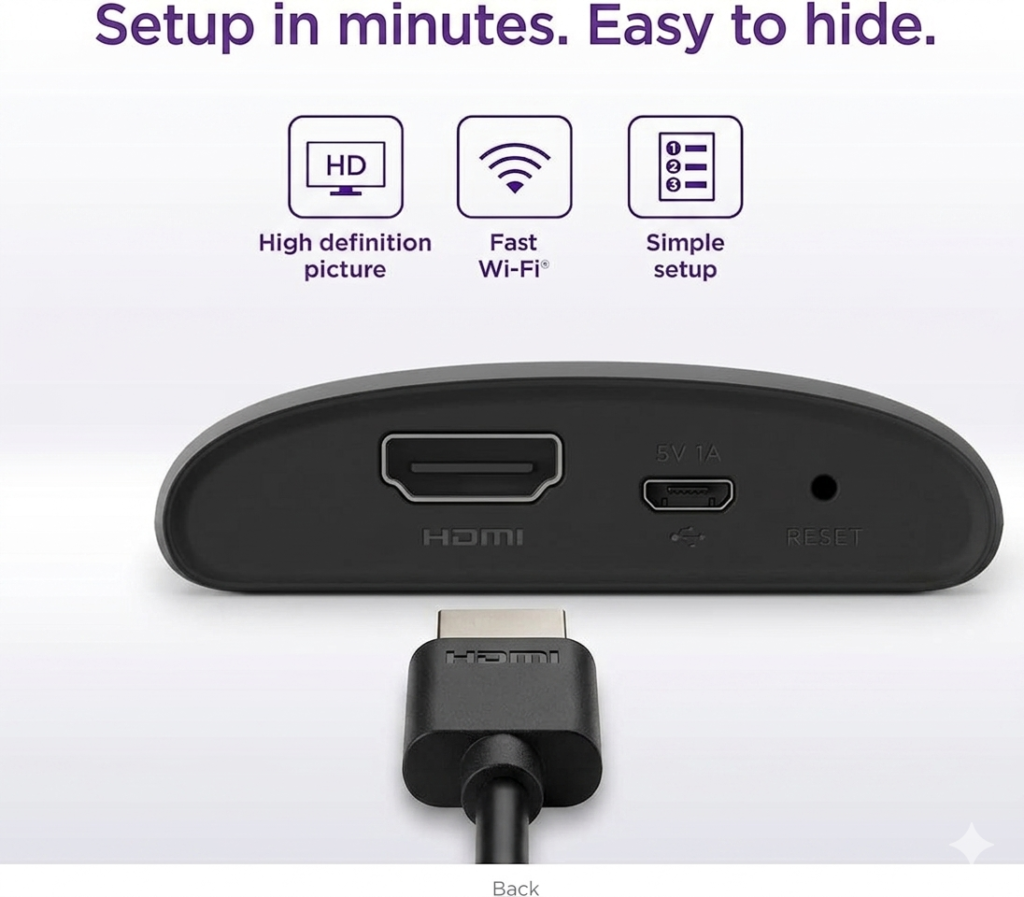
3. Connectivity Issues: Wi-Fi Without the “Extra”
The Amazon listing in “image.png” claims “Fast Wi-Fi,” but it is important to distinguish between standard Wi-Fi and high-performance connectivity.
The Lack of MIMO Technology
Unlike the higher-tier Roku Streaming Stick 4K or the Roku Ultra, the Roku Express HD typically lacks MIMO (Multiple-Input Multiple-Output) antennas.
- Signal Strength: If your television is located in a bedroom or a basement far from the router, this device will struggle to maintain a stable connection.
- Congestion: In a household with many connected devices (phones, laptops, gaming consoles), the Roku Express HD is often the first to lose bandwidth priority, leading to the dreaded “Loading…” screen mid-movie.
4. Why the User Experience Suffers
To truly understand why the Roku Express HD is a deal to avoid, we must look at the software environment. Roku’s OS is generally praised for its simplicity, but that simplicity requires hardware that can keep up with background updates.
Bloatware and Background Processes
Modern streaming sticks are not just passive video players; they are active computers. They are constantly checking for firmware updates, refreshing ad banners on the home screen, and tracking viewing habits for recommendations. On a device with the limited overhead of the Roku Express HD, these background tasks eat into the performance available for your actual video stream.
Expert Insight: “A budget device is only a bargain until it starts wasting your time. Five seconds of lag every time you click a button adds up to a frustrating evening of entertainment.”
5. Better Alternatives: Where to Spend Your Money
If you are browsing deals similar to the one in “image.png”, consider these alternatives that offer significantly better value for your dollar:
- Roku Streaming Stick 4K: It hides behind your TV, supports Dolby Vision, and includes a remote that controls your TV’s power and volume.
- Chromecast with Google TV (4K): Offers a superior “Watchlist” feature that aggregates content from all your subscriptions into one menu.
- Amazon Fire TV Stick 4K Max: Currently one of the fastest budget-friendly sticks on the market, supporting Wi-Fi 6 for much more stable streaming.
6. The Environmental and Economic Impact of “Disposability”
There is an often-overlooked aspect of buying entry-level tech like the Roku Express HD: its lifecycle. Because the hardware is so close to the minimum requirements for modern streaming, these devices often end up in desk drawers or landfills within two years.
By spending an extra $10 to $20 now on a 4K-capable device, you are not just getting better pixels; you are buying a piece of hardware that will likely remain functional and snappy for 4 to 5 years. This “buy once, cry once” philosophy is both better for your wallet in the long run and better for reducing electronic waste.7. Deep Dive: Decoding the Amazon Listing in “image.png”
When we examine the “Know before you buy” section in “image.png”, the marketing language is very specific. It mentions “Guided Setup” and “Fast Wi-Fi.” These are features that appeal to the “non-techy” consumer. However, for anyone who uses their TV daily, these are the bare minimums.
The listing also shows “Only 6 left in stock – order soon.” This is a classic “Scarcity Principle” used in e-commerce to rush you into a purchase without checking the specs. Don’t let the red text pressure you into buying hardware that doesn’t meet the standards of 2026.8. Final Verdict: The “Avoid” List
The Roku Express HD is a perfect example of a product that exists solely to hit a specific price point ($49.99 or lower) during sales events. It is designed for the casual observer who doesn’t realize that for the price of a couple of cups of coffee, they could have a vastly superior experience.
Skip the Roku Express HD if:
- You have a 4K TV (or plan to get one).
- You hate using two remotes.
- Your Wi-Fi router isn’t in the same room as the TV.
- You want your apps to open instantly.
Consider it ONLY if:- You are connecting it to a very old 720p/1080p TV in a garage or guest room.
- The device is literally being given away for under $20.
In the end, the data in “image.png” tells a story of a device that belongs in 2018, not 2026. Do yourself a favor this Black Friday: ignore the “Best Seller” badge and invest in hardware that can actually handle the future of television.
At DailyDealSpot24, our testing suite for 2026 involves more than just plugging in a dongle.
Technical Deep Dive: Why Hardware Matters
- Decoding Capabilities: The Roku Express HD uses an entry-level video decoder. While it supports H.264 and limited HEVC, it lacks the hardware acceleration required for modern, high-bitrate codecs found in premium 4K streaming. This leads to longer buffering times on slow connections.
- The Power Supply Factor: Many users try to power the device using their TV’s USB port. However, the Roku Express HD often requires more stable voltage than a standard USB 2.0 port can provide. This results in the “Low Power” warning or random restarts, which are common complaints in the Amazon reviews shown in “image.png”.
- Audio Limitations: Unlike its bigger brothers, this device does not support Dolby Vision or Atmos passthrough natively. If you have a soundbar or a home theater system, the Roku Express HD will be the weakest link in your audio chain, forcing high-end sound systems to play compressed, stereo audio.
Who Should Actually Buy This?
Despite our recommendation to skip it for your main TV, there are two scenarios where this device makes sense:
- Travelers: Its tiny footprint makes it a great “travel stick” for hotel TVs that are usually only 720p or 1080p anyway.
- Kitchen/Office Monitors: If you have an old computer monitor with an HDMI port and no smart features, this is a cheap way to give it a second life.
Final Thoughts: Is the Roku Express HD Right for Anyone?
While our review strongly suggests opting for a 4K model, the Roku Express HD isn’t without its niche audience. If you are specifically looking for a device to power a non-smart TV in a guest room, a children’s playroom, or a small kitchen monitor where 1080p resolution is more than sufficient, then this deal makes financial sense.
However, for your primary living room entertainment hub, the hardware limitations—specifically the lack of volume controls on the remote and the aging processor—will likely lead to “smart TV fatigue” within the first few months of use. In the fast-paced world of streaming, your hardware needs to be as fast as your internet connection. Settling for the Roku Express HD might save you twenty dollars today, but it will cost you in convenience and longevity tomorrow.
Always check the latest firmware updates after purchasing, as Roku frequently pushes optimizations that can slightly improve the snappiness of the interface, even on budget models like the Roku Express HD.